
From our Walnut Creek law firm, our leading attorneys serve injury victims throughout Oakland, Livermore, Fairfield, and Antioch, California. Reach out today and schedule a free consultation with us to discuss your injury claim.


You should feel confident in your legal partner. Our attorneys offer over 60 years of combined legal experience and are ready to advocate for you

A trustworthy attorney can make all the difference. You can count on us to pursue the maximum financial compensation you need for recovery.

You deserve to understand what your options are. With our knowledge & Spanish-speaking capabilities, we can make complex legal terms accessible.
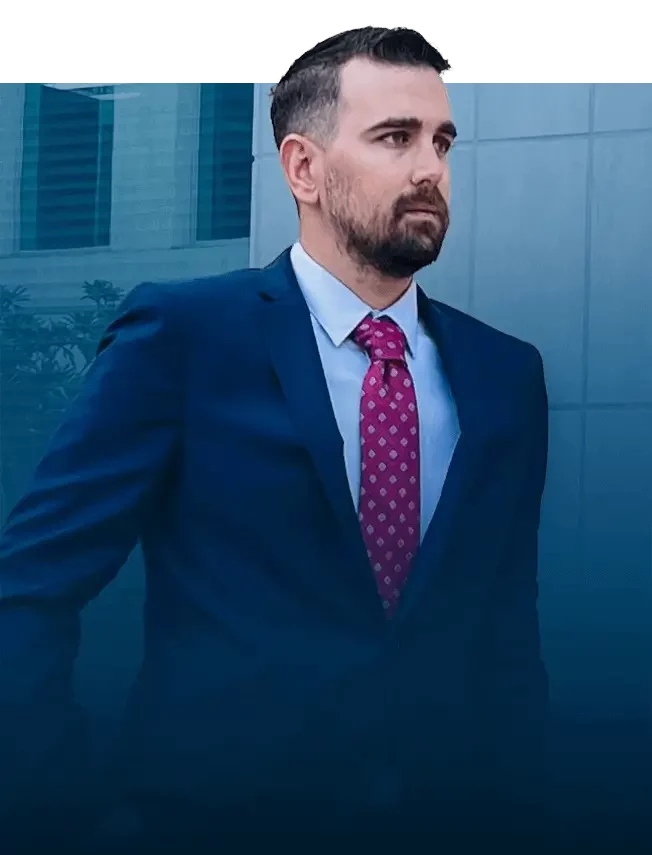
Workers' Compensation & Personal Injury Attorneys in Walnut Creek, California
Practice Areas
Partner With Attorneys You Can Trust
Brand Peters PC is unique because of our ability to handle both personal injury and workers’ compensation cases. From construction accidents to traffic collisions, our attorneys have ample experience in mediating and litigating wide a range of case types.
Accident insurance should give you peace of mind when misfortune strikes. But sometimes, insurance companies will attempt to avoid their responsibilities to cut costs. If you or a loved one has been injured at work or because of a different act of negligence, don’t hesitate to call our Bay Area law firm. We proudly serve those throughout Oakland, Livermore, Fairfield, and Antioch, California.
Case Results
$3,787,502
Worker Struck by Tree Trunk
Head and neck injury as a result of being hit by a tree trunk. Client obtained lifetime benefits totaling $2,399,198.00 and $1,388,304.12 in past medical paid. The total value of benefits obtained $3,787,502.00
$2,796,023
Failed Back Surgery
Failed back surgery case. $2,796,023.00 obtained for medical, temporary disability, permanent disability. Lifelong benefits obtained.
$2,626,750
Fall on the Job
Sheet metal worker falls on the job site, suffers back, neck, and knee injuries. Offered $1.5 million but, after a 3-week jury trial, was rewarded $2,626,750, which included costs related to past and present medical bills, pain, and suffering, and lost earnings capability.
Don’t Settle For Less
We Fight to Right the Wrongs
After being injured in an on-the-job accident, you should not hesitate to obtain the help of a workers’ compensation attorney from Brand Peters PC. With extensive experience in all matters related to work injury claims and filing for workers’ compensation, you can trust us to represent you. We also assist clients who are struggling with a range of matters related to workers’ compensation, including eligibility requirements, obtaining medical treatment, and obtaining temporary disability benefits. No matter how complex your situation may be, our workers’ comp attorneys are here to help you move forward.
We have the resources and skills to handle claims that involve multiple parties and lengthy settlement processes. If you or someone you love has been hurt in an accident, one of our personal injury attorneys will fight for the fair compensation you need to navigate the recovery process and rebuild your life after the misfortune. We have successfully represented thousands of injured clients throughout the San Francisco Bay area and are ready to provide you with the care and support you deserve. Call us at (925) 489-0746 today in Walnut Creek, California, to schedule your free initial consultation.
Contact Us Today!

Testimonials
I could not ask for a more knowledgeable team when it comes to the ever-changing workers’ compensation laws.
I Can’t Imagine Anyone Else to Have Represented Me or A Better Resolution.
I Am Extremely Satisfied with The Representation by Mr. Brand in My Legal Matter.
I Am Thoroughly Pleased and Can Now Move on With My Life.
Our Blogs

Left-Turn and Intersection Accident Liability in Walnut Creek
In most left-turn accidents, the driver making the left turn is presumed to be at fault, since California law requires a turning driver to yield the right of way to oncoming traffic close enough to pose a hazard. This presumption is not automatic or absolute, and drivers going straight can share or bear fault if they were speeding, ran a red light, or otherwise contributed to the crash. Because Walnut Creek’s downtown mixes heavy left-turn traffic along corridors like North Main Street and Ygnacio Valley Road with pedestrians and cross traffic, these disputes come up often. Here is how California law actually determines fault at intersections and left turns.
The Left-Turn Statute: California Vehicle Code 21801
Under California Vehicle Code Section 21801, a driver intending to turn left or complete a U-turn must yield the right of way to all vehicles approaching from the opposite direction that are close enough to constitute a hazard, and must continue to yield until the turn can be completed with reasonable safety. Only once the turning driver has properly yielded do oncoming drivers have a duty to yield to the completing turn. In practice, this means a left-turning driver who pulls out in front of oncoming traffic that had the right of way is typically considered at fault for a resulting collision, since the statute places the burden of avoiding the hazard on the turning vehicle, not the vehicle going straight.
How Fault Can Shift to the Through Driver
The presumption against a left-turning driver is a starting point, not a final answer. California courts and insurers recognize several situations where a driver going straight through the intersection may share or bear primary fault, including:
- Running a red light or entering the intersection after the signal had already changed
- Speeding, which can make a gap in oncoming traffic appear larger and safer to turn into than it actually was
- Distracted driving that delayed braking or evasive action
- A driver who was not visible to the turning driver due to another vehicle blocking the sight line
Because these disputes often turn on timing, speed, and signal phase, physical evidence and witness accounts frequently become central to resolving fault.
Right-of-Way at Stop Signs and Uncontrolled Intersections
Not every intersection crash in Walnut Creek involves a left turn. California Vehicle Code Section 21802 requires a driver facing a stop sign to come to a complete stop and yield to vehicles already in the intersection or close enough to constitute a hazard, only proceeding once it is safe to do so. At an uncontrolled intersection with no stop signs or signals, California’s basic right-of-way rule generally gives priority to the vehicle that arrives first, or, when two vehicles arrive at approximately the same time, to the vehicle on the right.
Important: Traffic signal timing, dash camera footage, and witness statements are often decisive in left-turn and intersection cases, since these crashes frequently come down to conflicting accounts of who had the green light or right of way. This kind of evidence can be difficult to obtain once time has passed, so documenting the scene and identifying witnesses promptly matters.
Evidence That Commonly Determines Fault
Because right-of-way disputes rarely resolve based on vehicle damage alone, several types of evidence are typically used to reconstruct how an intersection or left-turn crash occurred:
- The official police crash report and diagram
- Traffic signal timing data or nearby camera footage
- Witness statements from other drivers or pedestrians
- Vehicle damage patterns, which can indicate the angle and point of impact
- Skid marks, which may suggest speed or reaction time
- Event data recorder information from the vehicles involved
Comparative Fault Can Still Apply
California follows a pure comparative negligence rule, established in the landmark case Li v. Yellow Cab Co. of California, 13 Cal. 3d 804 (1975). Under this rule, an injured driver can still recover compensation even if they share some percentage of fault for the crash, with their recovery reduced by that percentage rather than eliminated. In a left-turn or intersection case, this means both drivers’ conduct can be scrutinized, and a left-turning driver found mostly, but not entirely, at fault can still recover a reduced amount if the other driver also contributed to the crash, for example by speeding through a yellow light.
Common Left-Turn and Intersection Crash Locations in Walnut Creek
Certain intersections tend to see repeated left-turn and cross-traffic disputes due to a combination of high traffic volume, multi-phase signals, and pedestrian activity. Locations along North Main Street, Ygnacio Valley Road, and the busier segments of Mount Diablo Boulevard see a steady mix of commuters, left-turning traffic into shopping centers and side streets, and pedestrians crossing near downtown businesses, all of which increase the likelihood of a disputed right-of-way claim.
Deadlines That Can Affect Your Claim
In California, an injured driver generally has two years from the date of the accident to file a personal injury lawsuit under California Code of Civil Procedure Section 335.1. A shorter deadline applies if a government entity, such as the City of Walnut Creek, contributed to the crash through a malfunctioning signal or a road design issue, since California Government Code Section 911.2 generally requires a formal claim within six months. Missing either deadline can permanently bar recovery, regardless of how clearly the right-of-way rules favored the injured driver.
Talk to a Walnut Creek Car Accident Attorney
Left-turn and intersection accidents often involve disputed right-of-way claims and conflicting accounts of what happened, so having experienced legal guidance early can make a meaningful difference. Brand Peters PC represents injured clients throughout Walnut Creek in a full range of personal injury claims, including auto accident cases. Our attorneys can investigate your crash, gather the evidence needed to establish fault, and fight for the compensation you deserve. Contact us or call (925) 489-0746 today for a free consultation.
Disclaimer: This article is for informational purposes only and does not constitute legal advice. For legal guidance tailored to your specific situation, consult a licensed attorney.

Premises Liability & Negligent Security in Walnut Creek: What Property Owners and Visitors Should Know
California property owners and businesses have a legal duty to keep their premises reasonably safe, and in some cases that duty extends to protecting visitors from foreseeable crime committed by someone else. When a shopping center, apartment complex, parking structure, or bar in Walnut Creek fails to provide reasonable security and a visitor is assaulted, robbed, or otherwise harmed, the property owner may share responsibility for what happened. Understanding how California courts define foreseeability, whose duty applies, and what deadlines govern these claims can help clarify what options may be available after an incident.
The Legal Basis for Premises Liability in California
California Civil Code Section 1714 sets out the general rule that every person is responsible for injuries caused by a lack of ordinary care in the management of their property. Building on that statute, the California Supreme Court’s decision in Rowland v. Christian identified a set of factors courts use to decide whether a property owner owed a duty of care in a specific situation, including:
- The foreseeability of harm
- The closeness of the connection between the property condition and the injury
- The burden that a given safety measure would place on the owner
Premises liability covers a wide range of incidents, from slip and falls to swimming pool accidents. Negligent security is a more specific category within that broader area of law: it addresses situations where a criminal act by a third party, rather than a physical hazard like a wet floor, causes the injury.
Negligent Security as Its Own Category of Claim
Negligent security claims ask a different question than a typical slip and fall case. Instead of asking whether a property owner should have fixed a broken step, the question becomes whether the owner should have anticipated criminal conduct on the property and taken reasonable steps — such as adequate lighting, working locks, or security patrols — to reduce that risk.
The leading case on this subject is Ann M. v. Pacific Plaza Shopping Center, decided by the California Supreme Court in 1993. The court held that a landowner’s duty to provide security measures against crime is shaped primarily by the foreseeability of the type of harm that occurred, and that this foreseeability is most often established through evidence of prior similar incidents on the same property.
The court later refined this standard in Delgado v. Trax Bar & Grill, distinguishing between minimally burdensome precautions — such as calling police when trouble starts — and more burdensome measures, like hiring armed guards, which require a higher showing of foreseeability.
This framework has also been extended beyond shopping centers and commercial venues. In Vasquez v. Residential Investments, a California appellate court applied similar principles to residential landlords, holding that simple and inexpensive precautions, such as a functioning lock on a shared entrance, can be required even without a history of prior incidents at that specific address.
How Foreseeability Is Evaluated
Because foreseeability drives so much of a negligent security analysis, the following types of evidence often become central to a claim:
- Police reports or incident logs documenting prior crimes on the same property
- Crime statistics for the surrounding neighborhood or similar properties nearby
- Maintenance records showing broken locks, gates, or non-functioning cameras
- Lighting conditions in parking lots, stairwells, and common areas
- Industry standards for security staffing, surveillance, and access control
California courts have recognized that certain types of properties, including parking structures and late-night businesses, may present enough inherent risk that safety measures are expected even without a documented history of prior crimes at that exact location.
Who May Be Held Responsible
A negligent security claim can potentially involve more than one responsible party. Depending on the facts, liability may extend to:
- The property owner
- A property management company
- A business tenant that controls part of the premises
- A third-party security contractor hired to patrol the property
Apartment complexes, shopping centers, parking garages, hotels, and bars or nightclubs in and around Walnut Creek are among the property types where these claims most often arise.
Comparative Negligence and Its Role in a Claim
California follows a pure comparative negligence system. If an injured visitor is found partially at fault for what happened, their compensation may be reduced by their percentage of fault rather than eliminated entirely.
In a negligent security case, an insurer or defense attorney may raise questions about where the visitor was, why they were there, or what precautions they took. Understanding how comparative fault could apply to a specific set of facts is worth discussing with an attorney early on.
Deadlines That Can Apply to These Claims
Most California personal injury claims, including premises liability and negligent security cases, must be filed within two years of the incident under Code of Civil Procedure Section 335.1.
A shorter and stricter timeline applies when a public entity is involved, such as an incident at a BART station, a public parking garage, or another government-owned property in Walnut Creek. Under Government Code Section 911.2, a written claim must generally be presented to the public entity within six months of the incident before a lawsuit can move forward at all. Missing this administrative deadline can permanently bar a claim against a government defendant, even when the underlying facts are strong.
Steps Worth Taking After an Incident
- Seek medical attention and keep records of all treatment related to the injury
- Report the incident to the property owner, manager, or police, and request a copy of any report
- Photograph the scene, including lighting, locks, gates, and any visible security equipment
- Identify and note contact information for any witnesses
- Send a preservation request for surveillance footage as soon as possible, since many systems overwrite recordings within days
- Avoid giving a recorded statement to an insurance representative before understanding how it may affect a claim
Getting Help After a Negligent Security Incident
Negligent security cases often involve multiple potentially responsible parties, competing evidence about foreseeability, and evidence that can disappear within days of an incident. Reviewing the specific facts of an injury with someone familiar with California’s premises liability framework can help clarify what evidence matters most and what steps to take next.
Talk to a Walnut Creek Premises Liability Attorney
Negligent security cases turn on facts that can disappear quickly, including surveillance footage, incident logs, and lighting conditions. Brand Peters PC represents injured clients throughout Contra Costa, Alameda, and Solano Counties in personal injury matters, including premises liability and negligent security claims. Reach out through our contact page or call (925) 489-0746 to discuss your situation.
Disclaimer: This article is for informational purposes only and does not constitute legal advice. For legal guidance tailored to your specific situation, consult a licensed attorney.